
How Arrest Warrants Work in Caddo County
Every Caddo warrant begins with a sworn statement, not a list entry. Under La. C.Cr.P. art. 202, a magistrate in Caddo County may issue one once a complaint and a supporting affidavit establish probable cause. That magistrate can be a district judge, a justice of the peace, or a mayor. The role matters. Probable cause means facts that would lead a reasonable person to believe a crime occurred and that the named person committed it. Each Caddo magistrate applies that bar. Once the affidavit passes, the warrant issues. Many Caddo cases then move through the Caddo Parish Clerk of Court criminal division, which keeps the filings and any bench warrants that follow.
Arrest Warrants: What They Contain
Caddo County follows state law here. Under La. C.Cr.P. art. 203, a warrant names the case, the date and place of issuance, and the magistrate.
| State and issuing court | The State of Louisiana and the Caddo court that signed it |
|---|---|
| Date and place of issuance | When and where the magistrate signed |
| Person to be arrested | The name from the affidavit |
| Offense | The charge tied to the warrant |
| Command to arrest and book | The order to take the person into custody |
| Magistrate signature | The signature authorizing the warrant |
| Bail information | Any bail set when the warrant issued |
A warrant number speeds any Caddo County records request. Numbers look like 2024-CR-01234, an example only. Note: A Caddo warrant number belongs to the issuing court, so the Caddo Clerk asks for it first.
Caddo Arrest Warrant Terms in Plain Words
Caddo County records use a short set of warrant terms, and the words are not interchangeable.
- Bench warrant
- A court order that follows a missed date or a failure to comply with a court order.
- Recall
- The issuing court withdraws the warrant.
- Quash
- A court sets the warrant aside, much like a recall.
- Bond forfeiture
- What can follow a missed date after bond was posted, leaving the bond at risk.
- Failure to appear
- A missed Caddo court date that can lead to a warrant.
Louisiana courts, including those in Caddo County, say bench warrant and failure to appear rather than the shorthand used in other states.
Caddo Warrant, Arrest, and Booking Records
Four records get confused in Caddo County. A warrant record is the authorization to arrest. An arrest record is a separate law-enforcement event, and a booking record is what the Caddo jail collects in its own inmate lookup. A docket record is the Clerk's case file. La. R.S. 44:4 keeps those channels apart in Caddo County, separating public reports and citations from investigative or restricted arrest records.
Key Limits:
A Caddo public-records request is not a live status check; it returns the file as the office answered.
Law-enforcement exceptions let a Caddo office withhold some arrest material.
A juvenile Caddo matter stays confidential, and an expunged record is no longer public.
How Warrants Get Served in Caddo County
Caddo Parish splits service by court. The Caddo Parish Sheriff's Office warrants division works district warrants from the First Judicial District Court, and its public active warrant list covers the rest. The Shreveport City Marshal divisions and staff page names the office that carries city court warrants in Caddo County.
Marshals and deputies work the same Caddo County streets but answer to different courts. Name the court when you ask. Under La. C.Cr.P. art. 205, a Caddo warrant stays in force until it is executed or recalled. The list is a display, not the legal source. A Caddo recall comes from the court alone. Note: A name missing from the sheriff's list is not a clearance, because Caddo agencies keep their own records.
Caddo Arrest Warrant Operations by Year
Caddo warrant sweeps have drawn wide attention. In 2017, Operation Zero Tolerance went after roughly 300 Caddo bench and arrest warrants. Operation Zero Hour followed in 2018, with Shreveport City deputy marshals and federal fugitive personnel pitching in.
Treat those Caddo County figures as history. None describes the warrants open in Caddo Parish today, though the pattern of interagency help, tips, and payment repeats.
Arrest Warrants, Summonses, and Bench Warrants
An arrest warrant orders officers to take a person into custody and book that person. A summons is lighter. It sets a court date. A bench warrant in Caddo County follows a missed date or a failure to comply.
| Point | Arrest Warrant | Summons | Bench Warrant |
|---|---|---|---|
| What it orders | Arrest and booking | Appearance on a date | Appearance or compliance |
| Who issues it | A magistrate | The court on the case | The judge in the case |
A missed Caddo date changes the paperwork. A summons can become a bench warrant, a Caddo County bench warrant can lead to custody, and the Caddo bench warrant lookup covers that chain.
Caddo Summons Instead of an Arrest Warrant
State law gives Caddo County courts a lighter tool. Under La. C.Cr.P. art. 211.1, a Caddo court may issue a summons instead of an arrest warrant in specified traffic and misdemeanor situations when the warrant came from the same jurisdiction. That is narrow. The limit matters more than the option. This is not a universal release rule, and local Caddo practice controls how it is used; no standing Caddo County program swaps warrants for summonses. A summons still carries a deadline. Missing it can put the Caddo case back where it started. Note: A court order to appear is not permission to ignore a Caddo warrant that is still active.
Federal Warrants and Caddo Parish Records
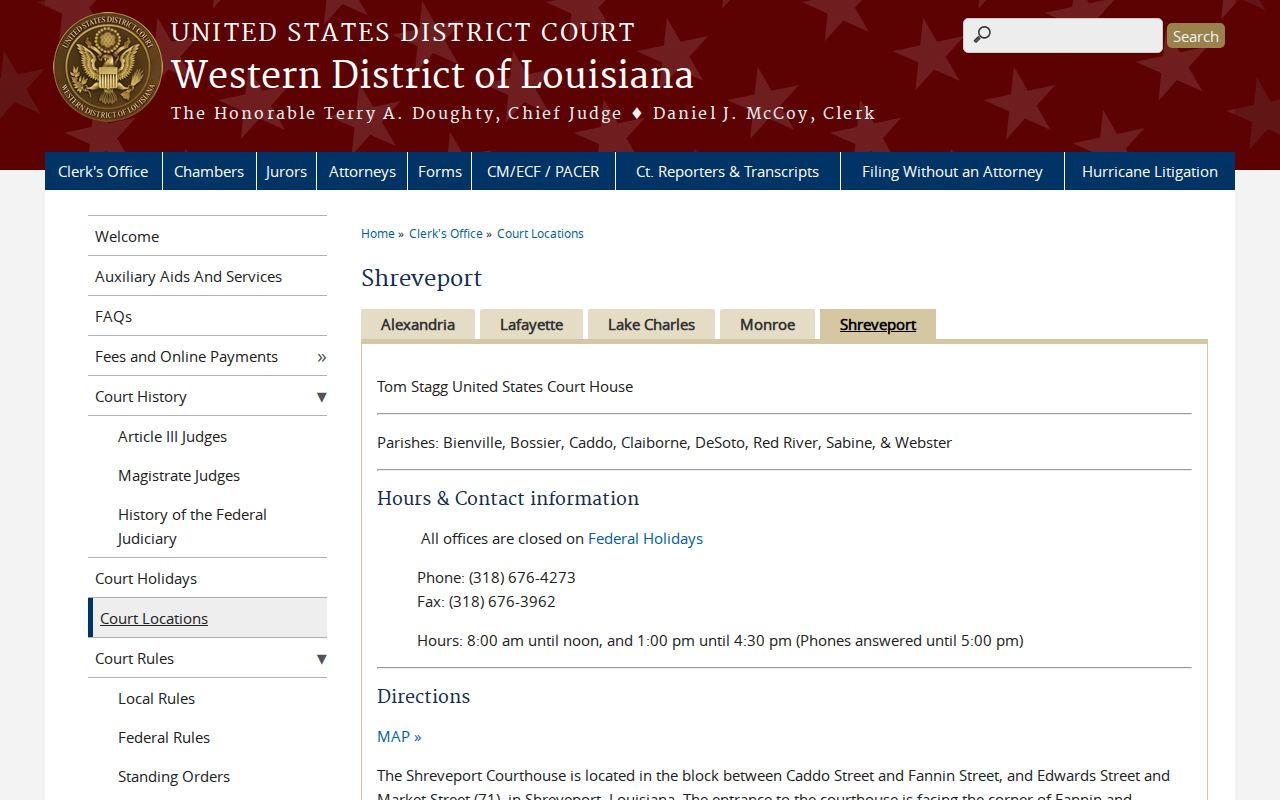
Federal matters sit apart from Caddo Parish records. Caddo Parish belongs to the Western District of Louisiana. A case filed at the Shreveport federal courthouse will not appear in a First Judicial District docket, on the Caddo sheriff's active list, or in a city citation search. A Caddo County search cannot clear one. The Western District of Louisiana, Shreveport page is the court's own route to federal case information.
PACER is the official federal docket system, not a free active warrant list. The fees are small but real. PACER's fee page lists 10 cents a page, a $3 cap per document, and a waiver at $30 or less. Keep federal results apart from Caddo County records.
Handling an Arrest Warrant in Your Name
A Caddo County warrant with your name on it is a court problem. Fixing it takes a lawyer, not luck. Call private counsel or the public defender, since your options hinge on the charge, the court, and the bond.
Act Now:
A Caddo warrant stays in force until a court acts, so it will not age away. Do not confront anyone named in a Caddo warrant. Contact the issuing Caddo court or the sheriff's warrant division before you act.
Court practice decides the path, and the issuing court sets the terms.
- Talk with a Louisiana attorney or the public defender first; the right step depends on the charge and bond.
- Ask about a turn-in surrender at the jail the issuing Caddo court uses, which lets the court set a new date.
- Address bond. Shreveport City Court ties a new date to a cash or surety bond arranged with a bondsman.
- Ask the court to recall or quash the warrant. A fine payment may settle a balance without clearing the warrant.
A recall or a quash is what actually ends a warrant. Money usually clears just a balance. The steps to clear a Caddo County warrant on the home page walk the same path. Note: Paying a Caddo County office does not prove every hold is gone, so ask the issuing court to confirm.